
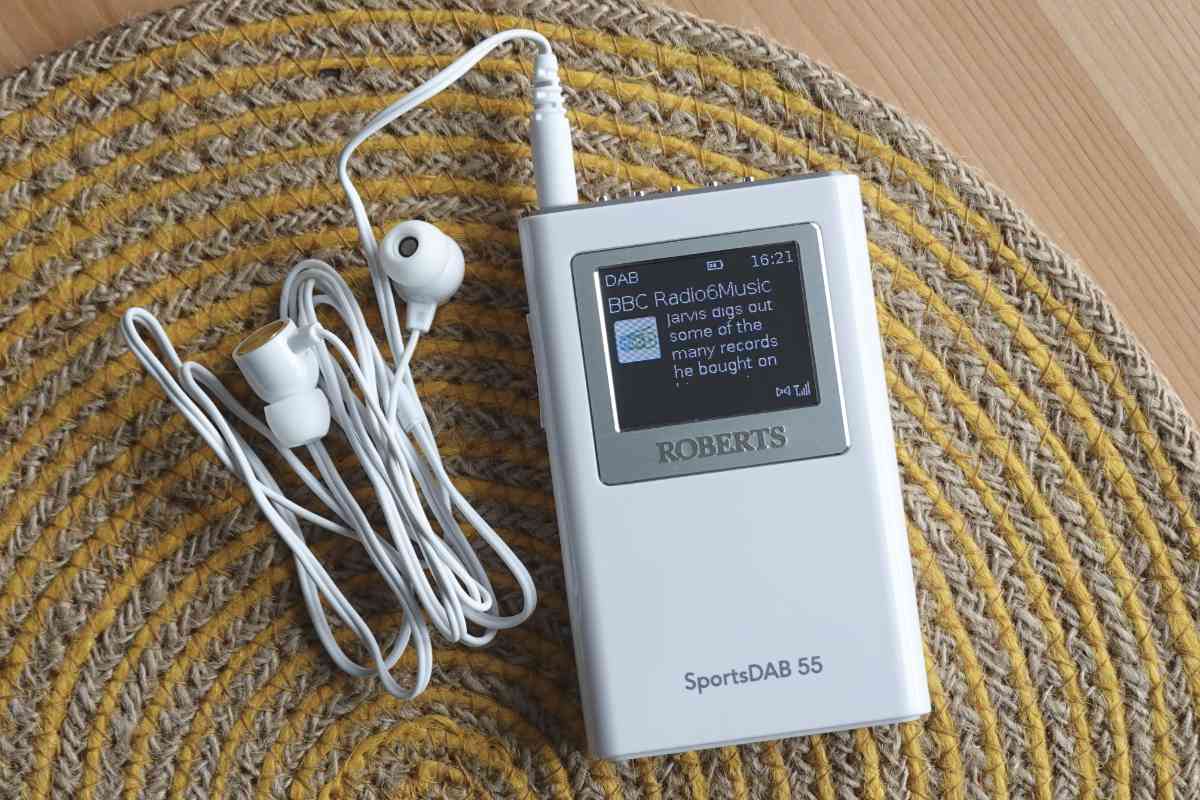
The Roberts SportsDAB 55 is a personal DAB/DAB+/FM radio with a colour display and dedicated preset buttons. It runs from 2 x AA batteries and has a 3.5mm headphone socket, but no speaker.
The SportsDAB 55 replaces the older SportsDAB 5 which featured a monochrome display with two lines of text.
In this review we’ll test out the new personal radio and see how it compares with the similar but now discontinued SportsDAB 5.
Features and setup
The Roberts SportsDAB 55 comes in a cardboard box with a set of stereo earphones, an instruction leaflet and warranty information. Batteries are not included. It’s interesting to see that the radio doesn’t have the protective film that the older radio came with, all going towards reducing plastic packaging.
Setting up the radio is simple. We plugged in a set of earphones, which also act as the antenna, and inserted two AA batteries. With the earphones fully extended we switched on the radio and it performed a scan for DAB digital radio stations. The time at the top of the display was set automatically.
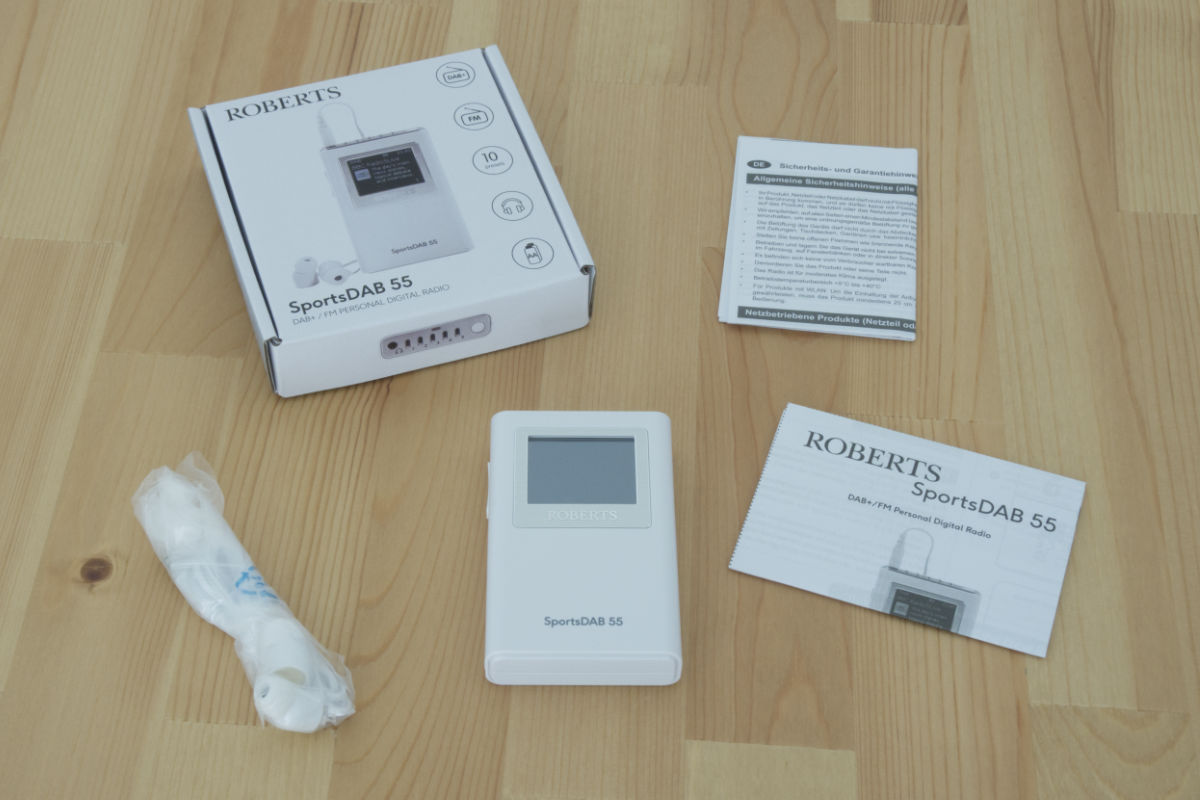
A folded user guide is included in the box. In typical Roberts fashion it’s easy to read, provides illustrations and covers all the functions of the radio.
A two year warranty is listed with the radio on the Roberts website.
Reception
The radio found all of the national and local digital radio stations we would expect to receive on a radio in our location.
Over two weeks of testing we found reception of DAB digital radio stations to be good. The experience is best when listening in a single location, such as at home or in a garden. On a three mile walk in an area with good DAB coverage the signal would occasionally drop out for one or two seconds.
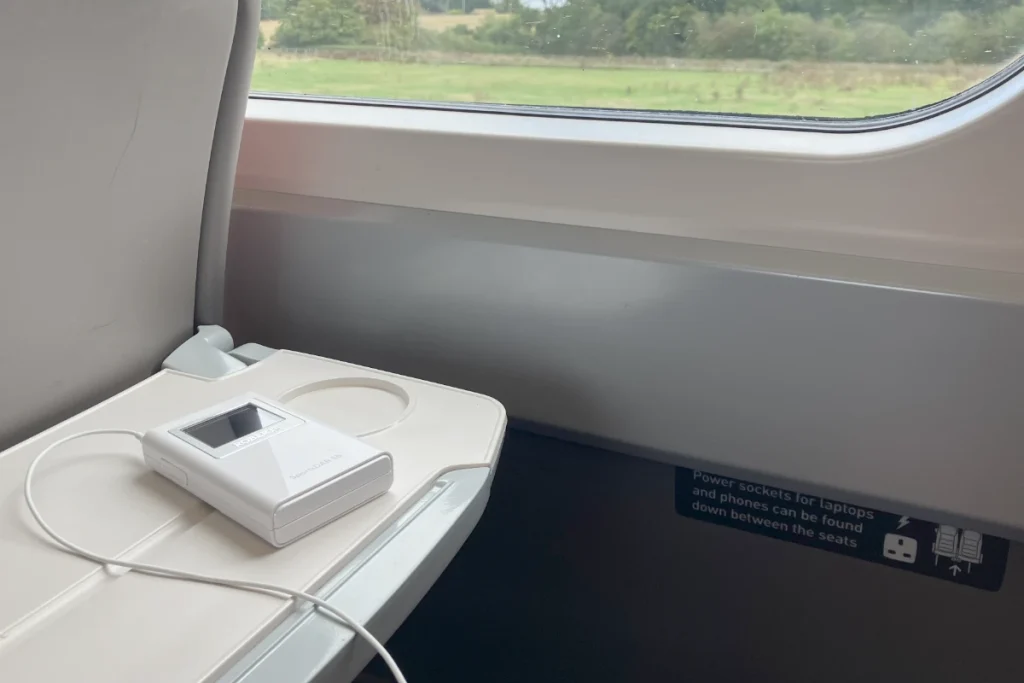
We tested the radio on buses and trains and were pleasantly surprised at how good the reception could be. On a day out in Sunderland reception of Nation Radio North East was excellent while walking and taking buses and a diesel train. On the East Coast Mainline we found that reception of national BBC radio stations on DAB could suffer from drop outs. Scanning for stations on FM at times also saw the radio go through the band without settling on a frequency.
In the North East we had no trouble tuning into radio stations from the small-scale DAB multiplexes which have fewer transmitters than the local and national multiplexes.
When using the FM mode we found that our normal national and local stations came through in stereo with the RDS station name and radiotext appearing within a few seconds. Scanning on FM is quick. We kept stereo reception of Capital on 106.4 MHz during an hour long walk. When sat in the same place with a Sony XDR-P1 there is noticeably more hiss on FM from the Roberts SportsDAB 55.
Overall we were satisfied with the reception of DAB digital radio and FM stations when using the Roberts SportsDAB 55. On some walking routes we know that listening with a smartphone using 4G would have provided for no interruptions, but we never felt disappointed with the personal radio.
Batteries
Power is provided from 2 x AA batteries which go in a battery slot on the rear of the radio. Battery life is listed in the specifications as 10 to 18 hours depending on the operating mode when using alkaline batteries.
We achieved over 10 hours of listening to various stations with Energizer MAX alkaline batteries. With IKEA’s 1900mAh rechargeable Ni-MH batteries we were able to listen to 13 hours of BBC Radio 2 on DAB digital radio with the volume set to 10.
The use of AA batteries rather than a built-in rechargeable battery has its benefits and drawbacks.
On the one hand it means that rechargeable AA batteries can be used, and if they go flat during listening they can easily be swapped with a freshly charged pair. In a pinch new AA batteries are widely available to buy too. Unlike radios with a rechargeable battery that’s sealed in, if the AA batteries don’t hold a charge as well as they used to it’s cheap and easy to buy new rechargeables on the High Street.
The downside of this approach is that batteries have to be charged outside of the device, often in a bulky battery charger at home. When so many trains, buses, coffee shops and other venues now have USB ports for charging it’s a shame that the radio can’t be recharged when travelling. It also means that the radio can’t be operated from mains power.
The Roberts SportsDAB 6 from a decade ago did have a built-in rechargeable battery providing 30 hours of listening. It would be good to see Roberts return to a device like this in the future.
Sound quality
The Roberts SportsDAB 55 features only a 3.5mm headphone socket on the top of the radio and there’s no speaker.
A set of white earphones are included with the radio.
The volume range is good and it’s possible to hear speech and music when walking along a busy road. The highest volume we needed to use was ’10’ as indicated on the display, which appears to be around half way on the scale. There are no EQ settings.
Stereo reproduction is good and we have no complaints about the overall sound from a radio at this price. When compared to the Sony XDR-P1 we did prefer the Sony’s sound, which is richer and more involving.
We mainly tested the radio with wired Apple earbuds. For the included earphones Roberts includes three sizes of silicon ear-tips.
Roberts SportsDAB 55 user interface
On the top of the SportsDAB 55 are the power button and five preset buttons, next to the earphone socket. The volume control is found on the left side, with the plus and minus buttons falling under the index and middle fingers.
All of the other functions, such as browsing stations, toggling through display modes and navigating the menus are accessed with the jog wheel on the right side. This falls under the thumb and pushes up and down to go through lists and pushes in to select.
On the back there’s a keylock switch to prevent any of the buttons from being activated, for example while the radio is in a bag or pocket.
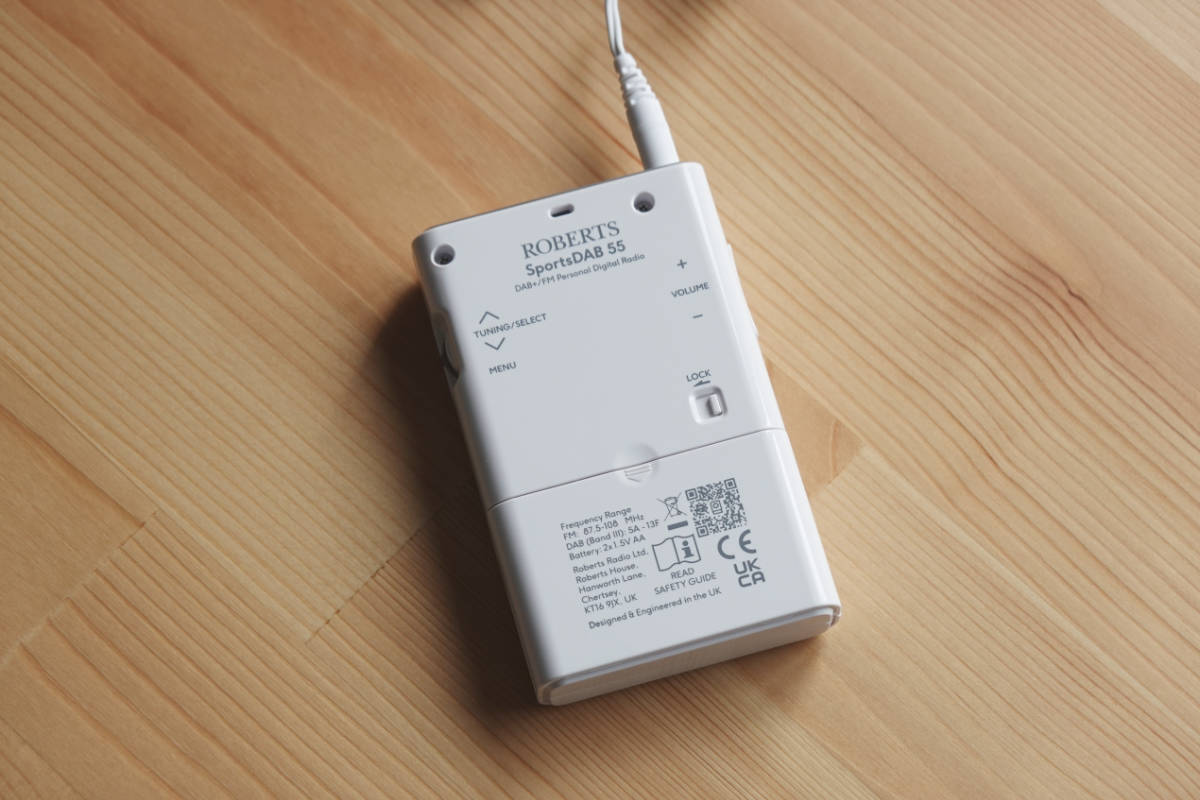
Overall this approach to browsing DAB digital radio stations is fine, but with over a hundred stations available in many areas now it can become tiresome to push the jog wheel up and down so many times. The dedicated preset buttons are certainly the best way to switch between favourite stations.
There are just five presets for DAB digital radio and five for FM. This means each preset gets its own button while in each mode.
This should be sufficient for storing a selection of stations offering sport commentaries or the UK’s news and talk stations. But with so many digital radio stations available in many parts of the UK now it could have been beneficial to have more preset slots or an additional favourites list.
Menus are logical and the use of the jog wheel in the menu system to switch between FM and DAB or to change settings on the radio all works well.
Display
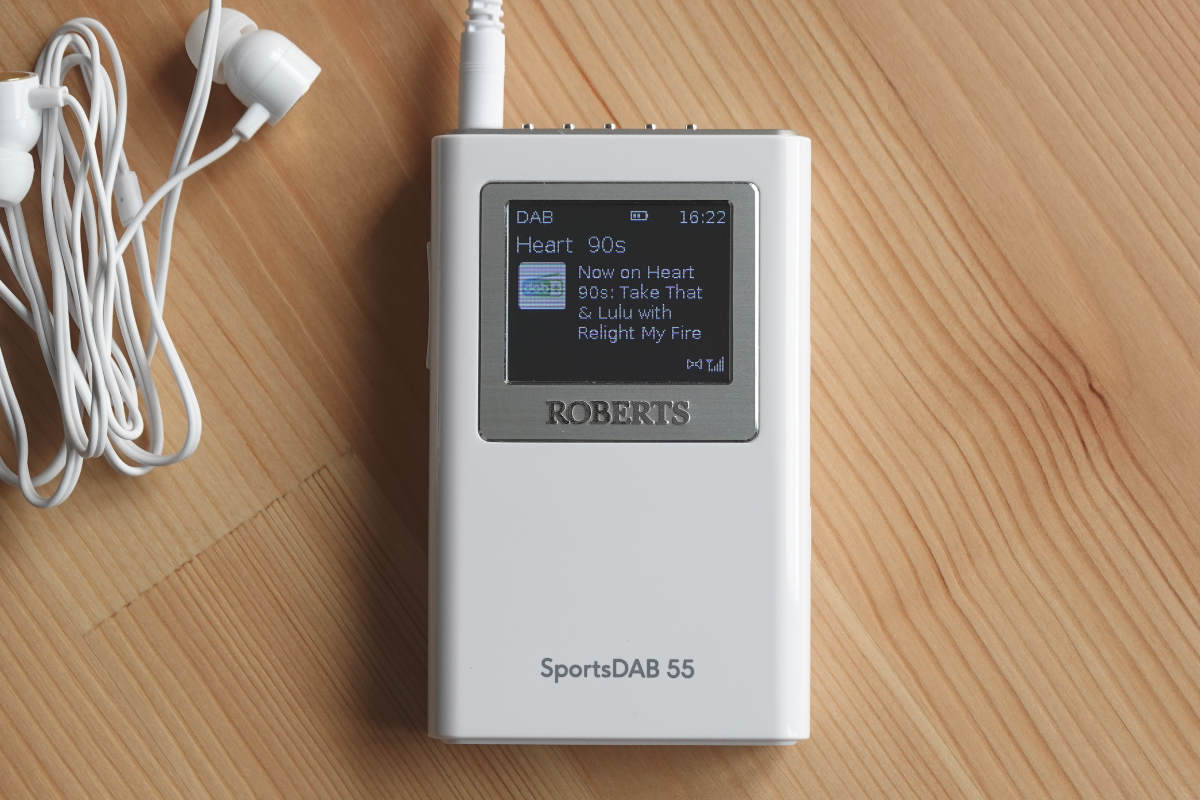
A 1.8″ colour LCD display on the front of the SportsDAB 55 shows information about the current station as well as the lists of stations and menus.
The layout of information is good, as is the size of the text and meters showing signal strength and battery level.
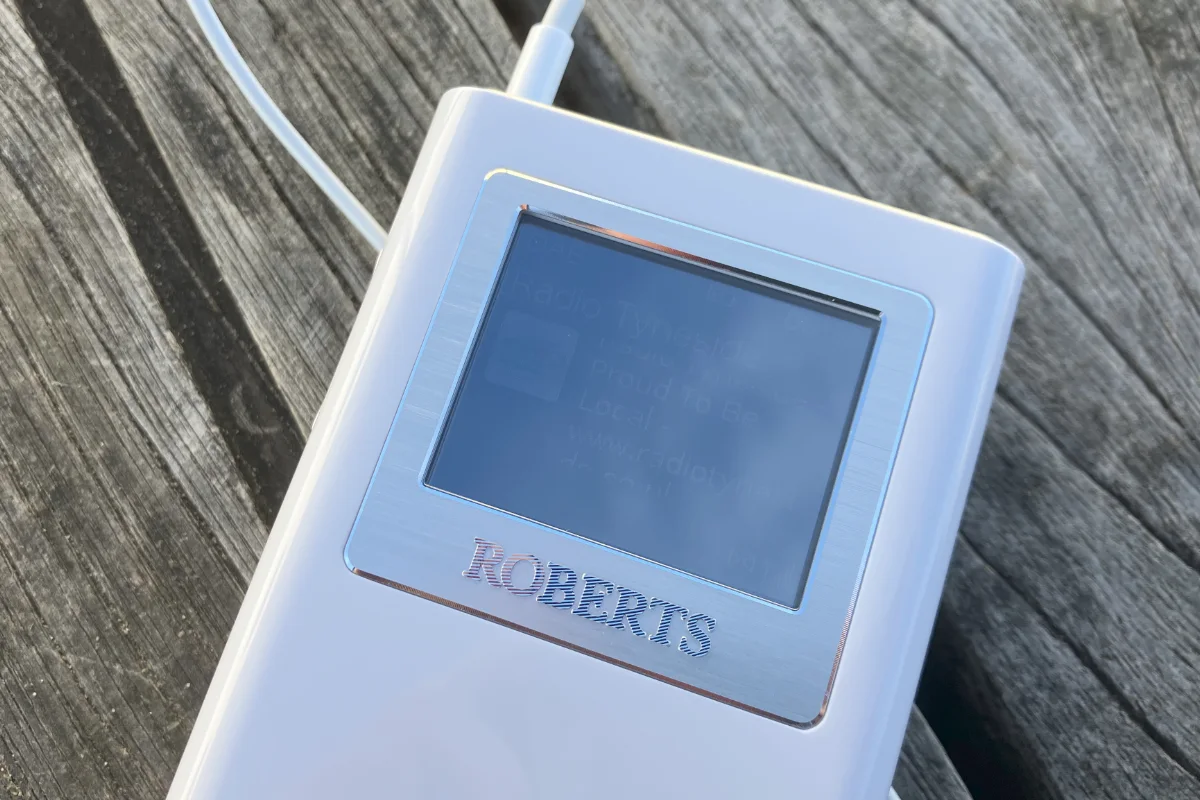
Viewing the display outdoors can be difficult on the low and medium brightness settings, and the viewing angles are fairly restrictive. In bright sunlight the display can be very difficult to see and it will need to be covered to see the information on the display or to help when selecting a radio station. Indoors the display is fine. The backlight display can be adjusted between low, medium and high through the menu.
Some DAB digital radio stations provide a ‘slide show’ image, which in the UK is typically the logo of the radio station. We saw the logo shown for the BBC’s national DAB radio stations as well as some small-scale DAB radio stations. The slide show image can take a while to display, and the radio lets you choose between showing the slideshow image alongside the other information, or full screen.
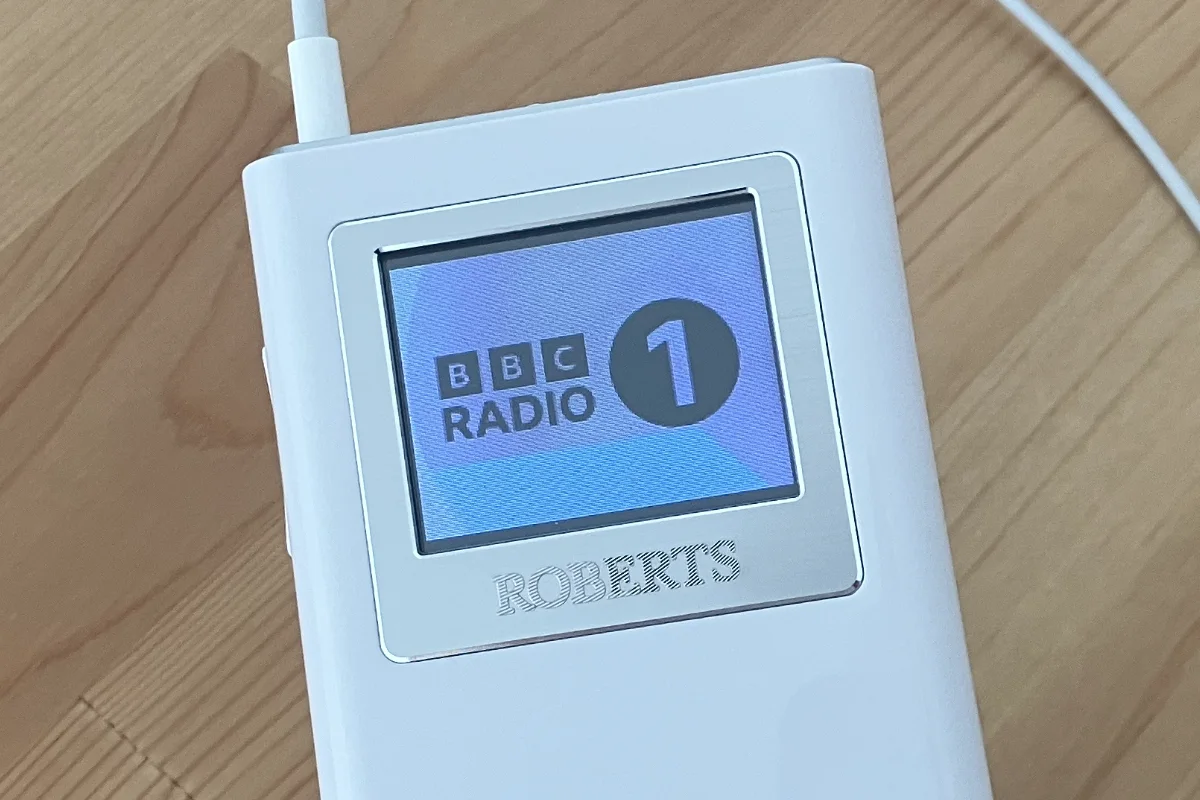
When the logo was shown alongside the station name and programme information it seemed to be cropped. We’re not sure if this is intentional, perhaps to show an image is available, or a software bug.
Our verdict on the Roberts SportsDAB 55
Roberts is to be applauded for continuing to offer a personal DAB and FM radio. Although Roberts has offered more personal and pocket radios in the past, other brands have stopped making this type of device entirely.
While the new display is more modern than the monochrome one found on the SportsDAB 5 a brighter display would have been welcome, given that the radio will be used outdoors.
When we reviewed the Roberts SportsDAB5 nine years ago we mentioned an RRP of £59.99, so at an extra five pounds the SportsDAB 55’s recommended retail price of £64.99 feels fair. Although that is still twice the cost of two alternative devices sold online.
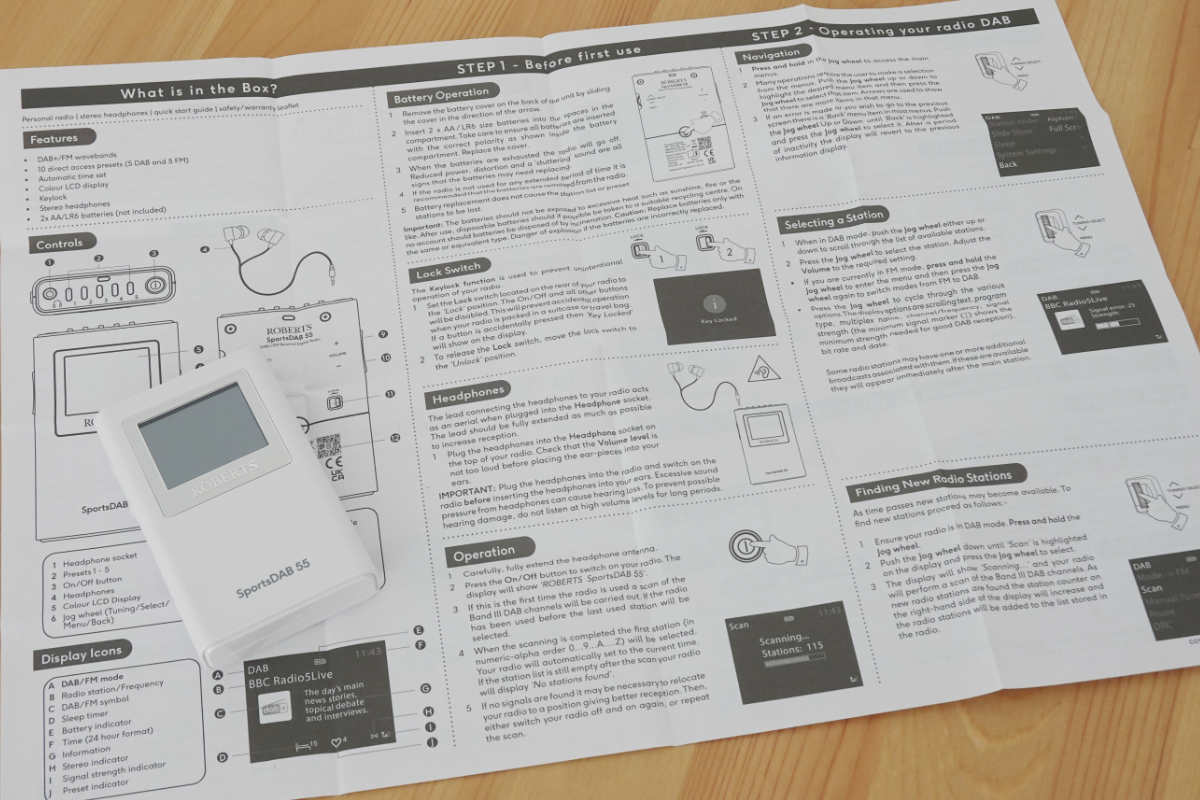
In the past Roberts has offered other personal and pocket digital radios under the SportsDAB name, but the SportsDAB 55 is sadly the only current model. We’d like to see the return of something like the SportsDAB 6 to fill the gap left by Sony and Pure in this category.
Overall the Roberts SportsDAB 55 is a good personal radio that’s worth considering for those who want DAB/DAB+ and FM radio on the move.
At a time when some music listeners are returning to iPods and exploring a range of new MP3 players, many of which suffer from compromises or drawbacks when compared to the devices of a decade ago, it would be good to see Roberts offer something in the future which also features a microSD card slot and a rechargeable battery.